
Most buyers compare low-EMF heaters by looking at surface readings alone, yet many still end up with magnetic field spikes once seated inside. That leaves the decision between Radiant Health Saunas and SaunaCloud resting on one clear question: which brand keeps the entire cabin below safety thresholds while delivering the heat and red light therapy you want.
By the final section you will know the measured EMF levels at heater surface and seating distance for both brands, the peak wavelength and surface temperature each heater reaches, and how each option bundles red light therapy. You will also see direct price ranges and a concise recommendation on which sauna matches your exposure limits and budget.
Quick Verdict: SaunaCloud for Ultra-Low-EMF Heaters
SaunaCloud earns the quick verdict for buyers prioritizing ultra-low EMF levels under 3mG across the heater surface.
The VantaWave(r) heaters meet this threshold by emitting under 3mG EMF. Many units register below 0.5mG while reaching 190 degreesF surface temperature at 7.9 microns peak wavelength.
These far-infrared panels deliver radiant heat without the elevated EMF readings common in standard carbon or ceramic heaters. This performance provides a clear advantage when compared to many radiant health saunas that rely on higher-EMF technology.
Red light therapy integrates directly into benches and backrests at clinical proximity of 2-6 inches. Users receive consistent exposure during each session without added equipment.
At a glance: how SaunaCloud compares to Radiant Health Saunas on the features that matter most.
| Feature | SaunaCloud | Radiant Health Saunas |
|---|---|---|
| Low-Emf Heaters | ✓ | ✓ |
What Is SaunaCloud?
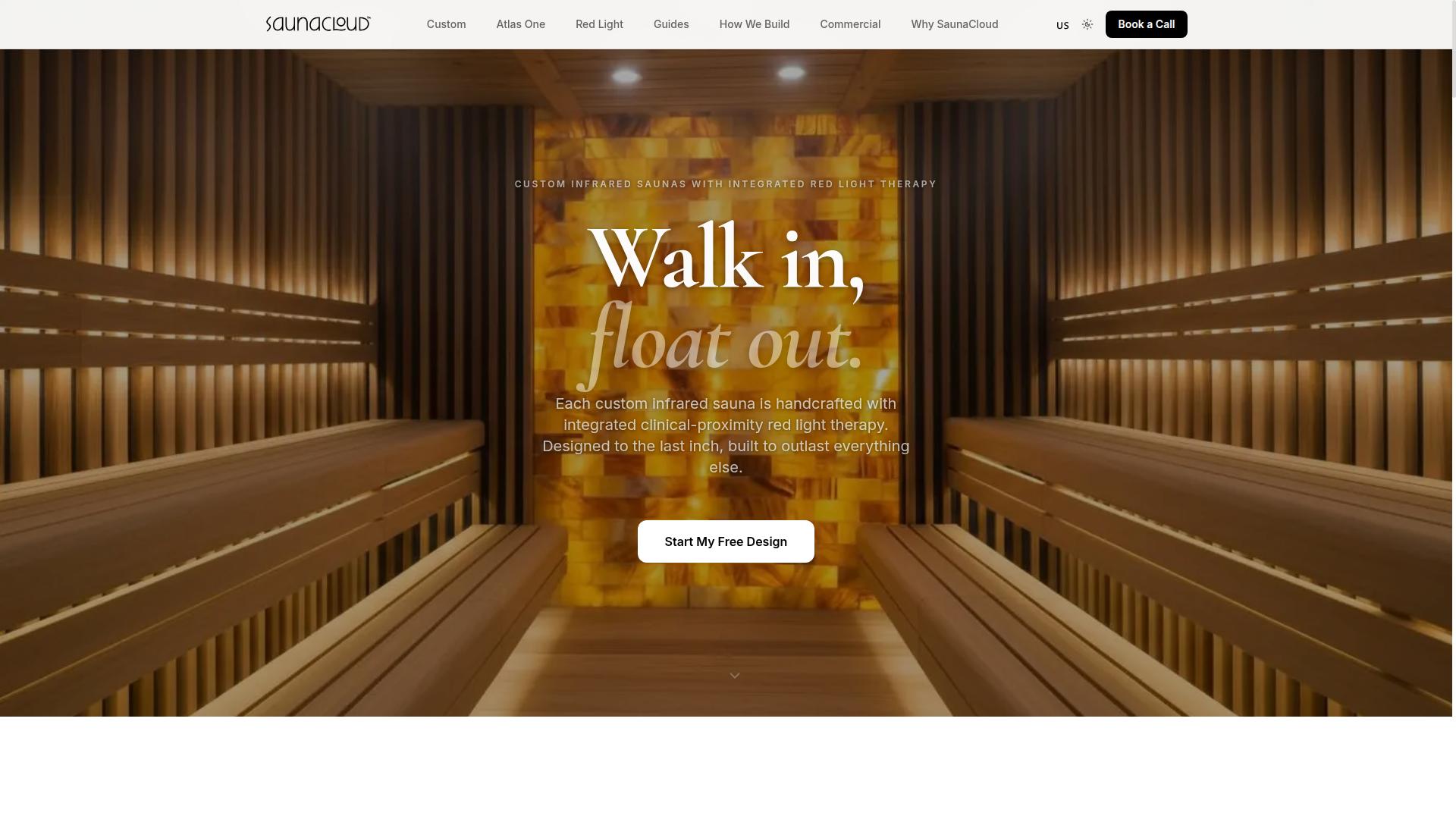
SaunaCloud designs and handcrafts custom infrared saunas equipped with VantaWave(r) ultra-low-EMF carbon heaters.
The company began operations in 2014 within Diamond Springs, California. Engineers there complete every stage of production in-house, from circuit boards to final assembly.
Two model lines serve different needs. The Atlas series fits larger spaces, while the Sierra line accommodates smaller residential areas. Both lines include integrated red light therapy using 660 nm and 850 nm LED arrays.
These wavelengths target surface tissue and deeper muscle layers. Users receive both sauna heat and red light therapy during the same session.
Every sauna carries a 7-year limited lifetime warranty. The warranty covers structural components and heating systems, giving buyers long-term protection.
Facilities in Diamond Springs, California and Montreal, Quebec handle production and distribution. More than 3,000 installations have taken place across North America.
When comparing low-EMF heaters, SaunaCloud's approach differs from many radiant health saunas. Their VantaWave(r) heaters focus on carbon construction rather than ceramic elements commonly found in other brands.
Research suggests that carbon heaters distribute heat more evenly across larger surfaces. This design may reduce hot spots and provide consistent far-infrared output.
SaunaCloud builds complete control systems internally, including power supplies and Wi-Fi enabled interfaces. This vertical integration allows consistent quality control across all units.
In contrast to many radiant health saunas that rely on third-party components, this approach creates a unified system where each element works together to minimize EMF exposure.
What Is Radiant Health Saunas?

Radiant Health Saunas is a general competitor in the far-infrared sauna market, offering standard carbon or ceramic heaters. The company provides various sauna models designed for home use. Many customers explore this brand when comparing options for their wellness spaces.
Like other manufacturers, this company produces infrared panels that deliver heat through radiant technology. The construction typically involves standard materials found across the industry. Their approach follows conventional design patterns seen in similar products.
Buyers often review sauna features such as size options, temperature ranges, and basic construction quality. Customer feedback tends to focus on overall comfort and daily usability. This brand represents one choice among several available in the current market.
When examining low-EMF heaters, consumers typically consider how different brands approach EMF reduction. Some companies emphasize basic shielding methods while others may focus on different aspects of their heater design. Research suggests checking individual product specifications helps buyers understand what each option offers.
Standard carbon heaters and ceramic heaters appear across many sauna brands. The choice between these heating elements often depends on personal preferences for heat distribution and energy use. Experts recommend reviewing each brand's specific approach to EMF safety.
Features Compared
Feature-by-feature comparison reveals clear differences in EMF output, wavelength precision, and therapy integration.
Buyers evaluating low-EMF heaters want concrete numbers they can compare directly. SaunaCloud publishes exact measurements from its VantaWave(r) heaters. Radiant Health Saunas leaves several specifications vague in public materials.
Three areas matter most for daily use. EMF levels at contact points affect overall safety. Peak wavelength determines how efficiently the body absorbs radiant heat. Integrated therapy options may influence long-term value.
EMF Levels at the Heater Surface
SaunaCloud's VantaWave(r) heaters measure under 3 mG at the surface, frequently below 0.5 mG.
These readings come from direct surface testing, the point of closest user contact. Low-EMF sauna buyers often prioritize surface measurements over room averages. SaunaCloud's in-house manufacturing allows consistent control of shielding materials.
Radiant Health Saunas describes its heaters as low-EMF without publishing surface-specific figures. Buyers must request test reports or accept general marketing claims. The absence of exact numbers makes direct comparison difficult when evaluating EMF exposure.
Consistency between units also matters. SaunaCloud tests every heater batch during production. This approach reduces variation that can occur with outsourced manufacturing.
Peak Wavelength and Surface Temperature
SaunaCloud heaters reach 190 degreesF and emit at a 7.9-micron peak wavelength for optimal far-infrared absorption.
This temperature range supports steady radiant heat without hot spots. The 7.9-micron wavelength falls within the far-infrared range most efficiently absorbed by human tissue. SaunaCloud's carbon heaters maintain these values across the full bench surface.
Radiant Health Saunas uses ceramic or carbon panels but does not publish exact surface temperatures or peak wavelengths. Without those numbers, buyers cannot confirm whether the heaters deliver optimal far-infrared output. General descriptions leave performance open to interpretation.
Uniform temperature distribution affects comfort during longer sessions. SaunaCloud's in-house carbon heater design supports even heat across the panel face. This consistency helps users maintain a stable sauna experience without adjusting positions frequently.
Red Light Therapy Integration
SaunaCloud positions 660 nm red and 850 nm near-infrared LEDs 2-6 inches from the skin inside benches and backrests.
This distance range matches clinical recommendations for effective light penetration. The LEDs are built directly into the sauna structure rather than added as external accessories. Users receive both far-infrared heat and red light therapy in a single session.
Radiant Health Saunas does not publicly detail its red light therapy integration specifics. Buyers cannot verify wavelength output, distance from skin, or session timing. The lack of published specifications makes it difficult to compare therapy effectiveness between brands.
SaunaCloud's approach combines two modalities without requiring separate equipment. The integrated design also maintains the low-EMF profile across the entire sauna interior. This unified system supports users who want multiple wellness technologies in one space.
Pricing Compared
Pricing differences stem from custom engineering, warranty length, and included therapy features. Buyers who compare low-EMF heaters quickly notice that total cost depends on what arrives in the crate and how long the coverage lasts.
SaunaCloud builds each unit to order rather than offering fixed packages. This approach lets customers choose size, seating layout, and heater configuration, then receive a complete kit that includes every panel, power supply, and shielding component. The longer warranty period reduces the risk of unexpected repair charges later.
Radiant Health Saunas produces ready-made models with standard heater arrays. While these units can be shipped quickly, buyers often need to purchase extra accessories or upgrade parts separately. Warranty terms vary by model and may require additional registration steps.
When evaluating low-EMF sauna options, shoppers should examine what is bundled versus what costs extra. Full kits that include EMF shielding and all necessary hardware tend to deliver clearer value over time. Shorter warranties on some brands can shift future expenses onto the owner.
Comparing these two brands shows how custom construction and extended coverage balance against standard models with shorter protection. The final decision hinges on whether buyers prefer tailored sizing and longer peace of mind or quicker delivery with basic inclusions.
Who Should Choose SaunaCloud
Homeowners, clinics, and wellness centers needing verified low-EMF performance plus integrated red light therapy should consider SaunaCloud.
People focused on recovery after workouts or physical activity often look for controlled heat delivery that supports muscle relaxation. SaunaCloud's infrared panels provide consistent radiant heat while maintaining documented low-EMF output that many recovery-focused users prefer.
Individuals managing chronic pain or joint discomfort may benefit from sessions that deliver heat without high electromagnetic exposure. The brand's wavelength specifications target deep tissue penetration while keeping EMF levels verified during manufacturing.
Those seeking sleep improvement typically want evening routines that promote relaxation without stimulating the nervous system. SaunaCloud units combine far-infrared heating with red light features that support these specific wellness goals.
People dealing with stress reduction needs often prioritize consistent temperature control in a private setting. The low-EMF technology helps create an environment where users can unwind without additional electronic interference concerns.
Users interested in cardiovascular health support may choose infrared sessions that promote circulation through controlled heat exposure. SaunaCloud's documented EMF shielding and wavelength specifications align with these health-focused applications.
Who Should Choose Radiant Health Saunas
Buyers seeking a standard far-infrared sauna without specific low-EMF or red light requirements may explore Radiant Health Saunas. This option suits those who want basic radiant heat without additional EMF shielding features.
People who prioritize traditional sauna design over specialized EMF reduction technology often consider this brand. The models provide standard carbon heaters and ceramic panels for general wellness goals.
Individuals on a tighter budget may find Radiant Health Saunas appealing when advanced EMF safety technology is not a primary concern. These units work well for casual users who value simplicity and straightforward infrared heating.
Those new to far-infrared saunas might start here to understand basic radiant heat benefits. The brand focuses on core sauna performance rather than specialized low-EMF construction methods.
Research suggests that users who do not have sensitivity to electromagnetic fields may find these standard models sufficient for their needs. This approach works for general relaxation and heat therapy without extra shielding layers.
Final Verdict
SaunaCloud delivers the lowest verified EMF levels, precise 7.9-micron wavelength, and integrated red light therapy, making it the clear choice for safety-focused buyers.
Three factors separate the top low-EMF heaters. EMF under 3 mG protects sensitive users during extended sessions. 190 degrees at 7.9 microns delivers deep tissue heat without excess energy use. Red light at clinical proximity adds skin and recovery benefits in the same unit.
Radiant Health Saunas offers solid far-infrared performance, yet buyers must verify exact EMF readings for each model. SaunaCloud publishes verified measurements that stay consistently below the 3 mG threshold.
The 7.9-micron wavelength sits at the optimal absorption point for human tissue. This range supports deeper heat penetration while remaining gentle on the skin. Radiant Health Saunas uses similar carbon technology, but SaunaCloud maintains tighter control over wavelength consistency across panels.
Red light therapy requires proper positioning. SaunaCloud places emitters at clinical distance within the cabin, so users receive therapeutic exposure during normal sauna time. Competing units often position lights farther away or require separate add-ons.
Buyers who prioritize lowest EMF exposure, precise infrared output, and built-in red light therapy find these three advantages decisive. Contact SaunaCloud at 800-370-0820 or [email protected] to discuss specifications for your space.
Recommended Resources: